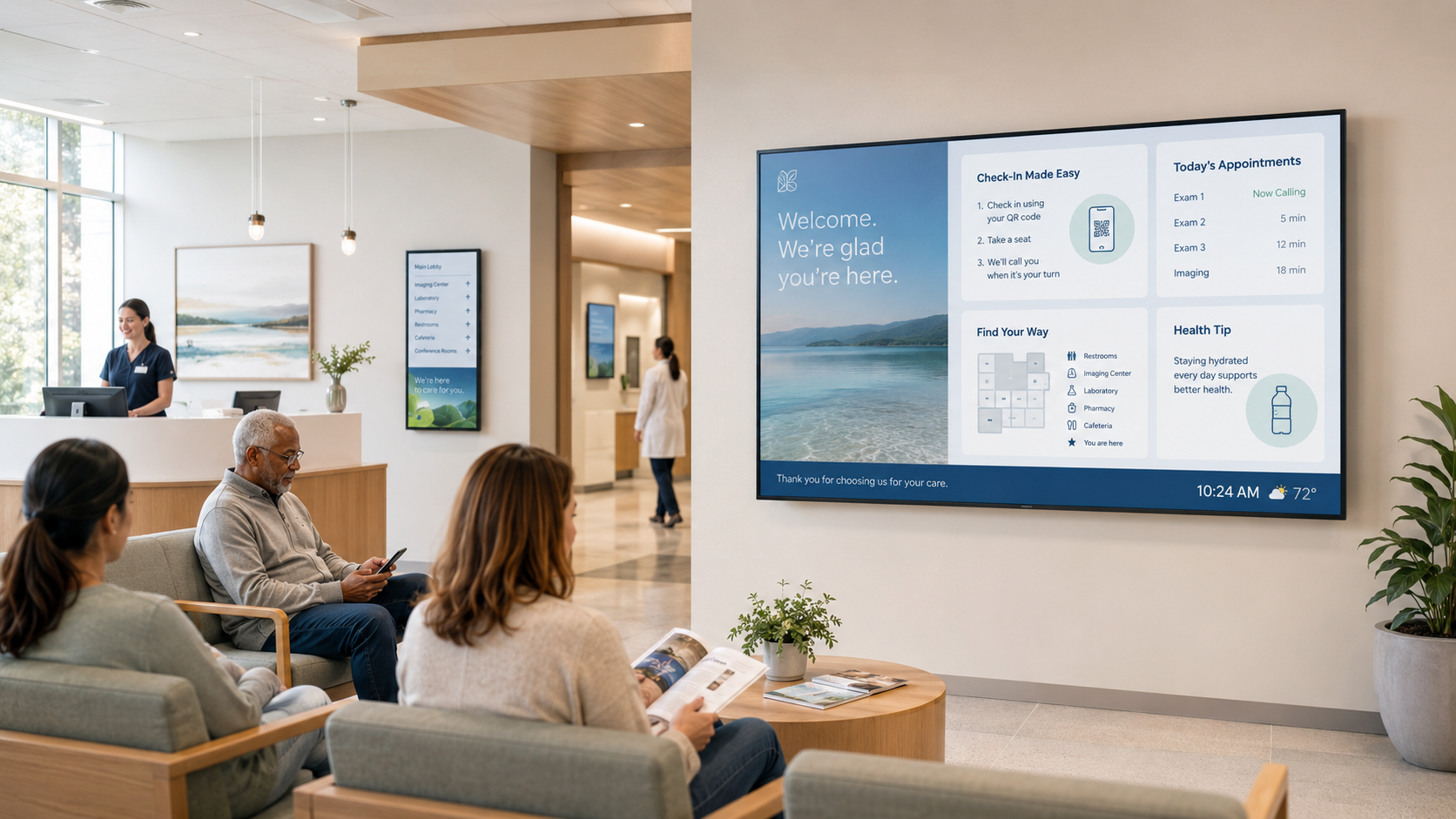
Quick answer: Healthcare facilities use digital signage to improve the patient experience, cut perceived wait times, and keep staff and visitors informed, all from one dashboard. Screens in waiting rooms, hallways and clinical areas educate patients, guide them with digital wayfinding, and free staff from answering the same questions. Engaging screen content can reduce a patient’s perceived wait time by up to 35%. A plug and play HDMI player turns any TV into a hospital or clinic display in under 90 seconds, and you can pull content from Instagram, Dropbox, Google Slides and PDFs with no rework.
What is digital signage for healthcare?
Digital signage in healthcare is any screen, from a waiting room display to a digital directory or a staff bulletin board, that is controlled by cloud software instead of printed paper. Medical centers, clinics and doctor offices use it to create, share and manage content that educates and entertains visitors while helping staff focus on care. It works across a single practice or an entire hospital campus, updated from one place.
How does digital signage improve the patient experience?
The waiting room sets the tone for a visit, and a screen there does more than fill silence. You can share medical tips and advice, ease anxiety with calm and engaging content, and highlight awareness campaigns or check ups that matter to your patients. That steady, useful communication builds a more positive relationship between staff and patients and raises overall satisfaction.
Can digital signage reduce patient wait times?
It reduces the wait that patients actually feel. Engaging screen content can lower perceived wait times by up to 35%, because attention is occupied and the time passes faster. You can pull screen ready content from Instagram, Dropbox, Google Slides and PDFs, so keeping the waiting room fresh takes minutes, not a design project.
Where do hospitals and clinics use screens?
Five placements do most of the work:
- Waiting room and lobby displays. Show registration and new patient check in instructions alongside educational content to improve the waiting experience.
- Digital directories and wayfinding. Help patients find offices, the pharmacy, examination rooms and amenities with digital maps you can update anytime a layout changes.
- Operating room boards. Provide real time updates on which rooms are in use to streamline scheduling, so nurses and staff can focus on urgent tasks.
- Employee bulletin boards. Support internal communication and staff training with boards that organize operational info, intakes, rotations and care.
- Advertising screens. Promote new procedures and products, seasonal offers and initiatives to boost patient and visitor engagement.
How does it help staff and operations?
Beyond the patient view, screens speed up patient intake, deliver ongoing staff training, and carry emergency information the moment it matters. That reduces operational cost and takes routine questions off your team, so staff spend more time on care and less on repeating directions. Because everything updates from one dashboard, a change to a policy or a wayfinding route reaches every screen instantly.
How much does healthcare digital signage cost?
Item | Typical cost |
|---|---|
Software (per screen / month) | $10 to $20 |
HDMI media player (one time, per screen) | about $100 to $200 |
Display / TV | Use a screen you already own, or about $300 to $1,200 for a commercial display |
Most facilities start with the highest traffic areas, like the main waiting room and the primary entrance, and expand to directories and clinical areas from there. Screenfluence runs on 99.99% uptime with an offline cache, so a screen keeps showing its last content even if the network drops.
Frequently asked questions
How does digital signage improve the patient experience?
It educates and reassures patients with useful waiting room content, guides them with digital wayfinding, and keeps information current, which builds a more positive relationship between staff and patients and raises satisfaction.
Can digital signage really reduce wait times?
It reduces perceived wait times by up to 35%. The actual wait may be the same, but engaging content makes the time feel shorter, which improves how patients rate their visit.
What should a healthcare waiting room screen show?
A mix of check in instructions, medical tips and advice, awareness campaigns, and calm engaging content. You can pull it from Instagram, Dropbox, Google Slides and PDFs with no rework.
Is it hard to install in a clinic or hospital?
No. A plug and play HDMI player turns any TV into a display in under 90 seconds, with no IT project, and every screen is managed from one dashboard.
Can we use it for wayfinding across a large facility?
Yes. Build digital directories and maps that patients use to find offices, the pharmacy and exam rooms, and update them anytime a layout or route changes.
How much does it cost?
Software is a transparent $10 to $20 per screen per month, plus a one time media player of about $100 to $200 per screen. You can use screens you already own.