
All case studies

Hospitality

How Marriott keeps guests and associates informed.

Marriott uses Screenfluence to keep guests informed and associates connected across multiple properties. One platform supports lobby displays, dining and event information, and employee communications, with central brand oversight and room for local updates.

How Marriott keeps guests and associates informed.
Client
Marriott International
Industry
Hospitality
Use case
Guest engagement & associate communications
Location
Worldwide
Visit website

The challenge

Two audiences, different information needs

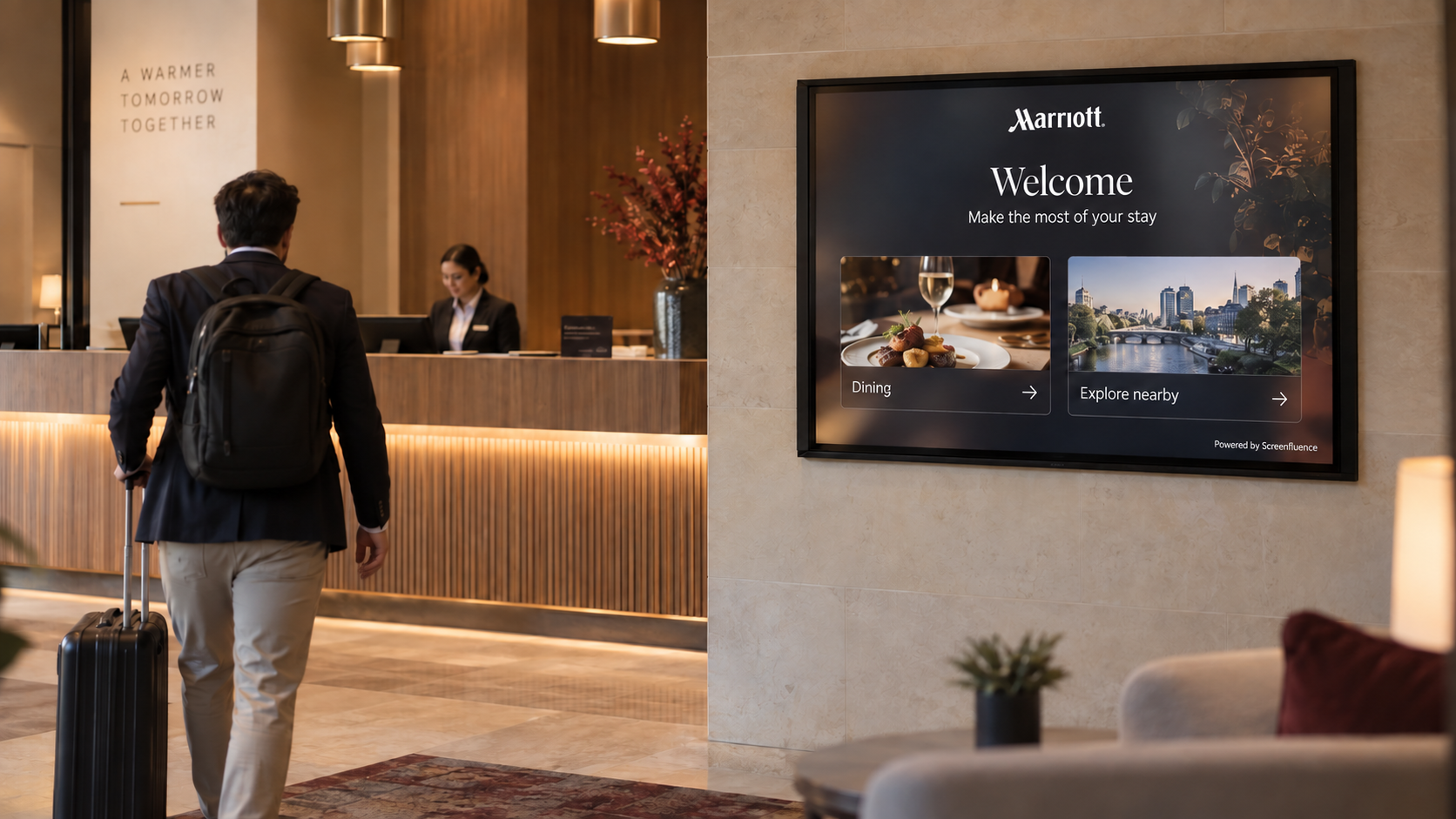
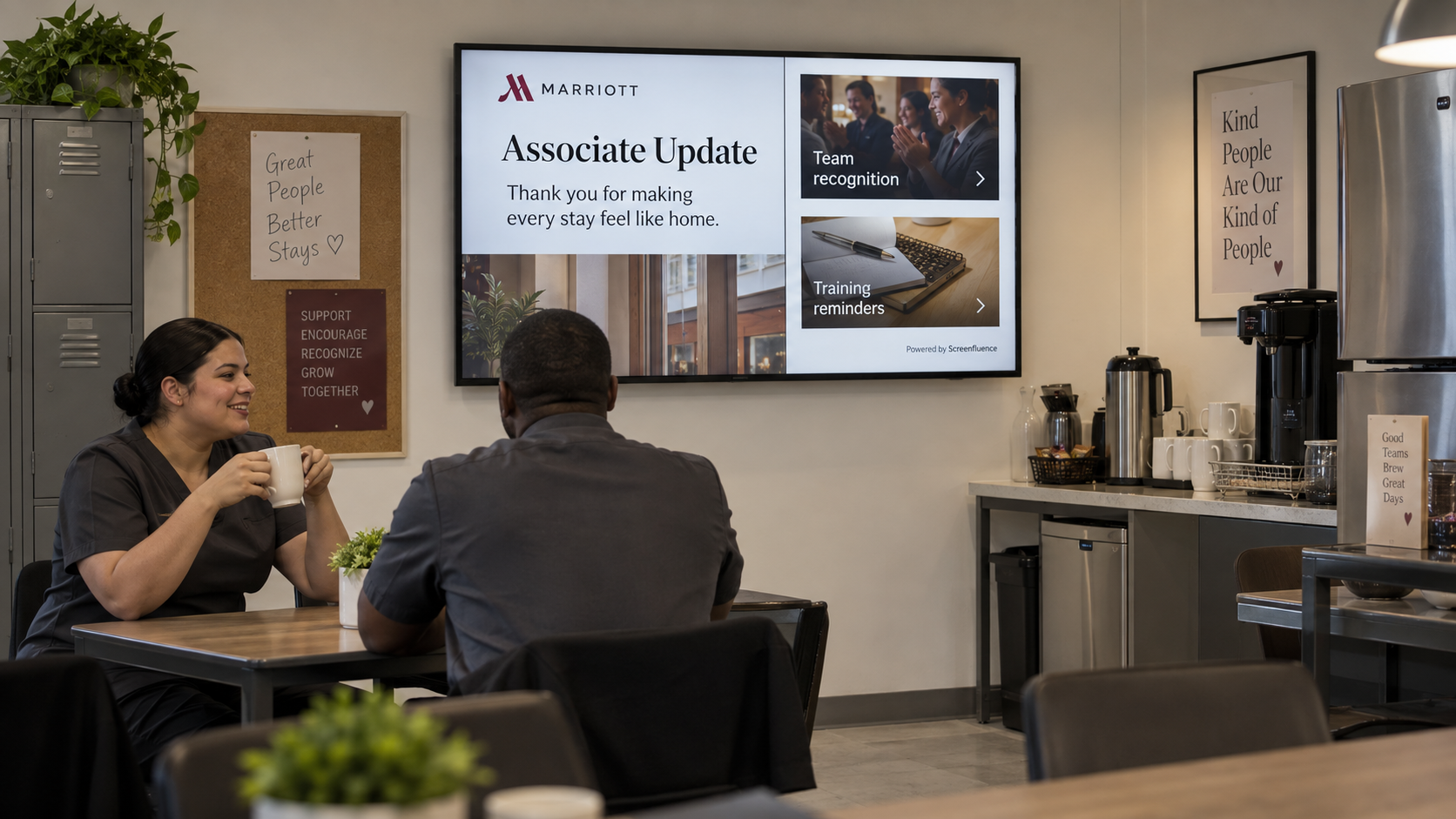
Communication is part of the daily operation of a hotel. Guests need to find out what is available during their stay, from dining and amenities to local events. Behind the scenes, associates need training reminders, HR communications and safety updates that help them stay informed at work.

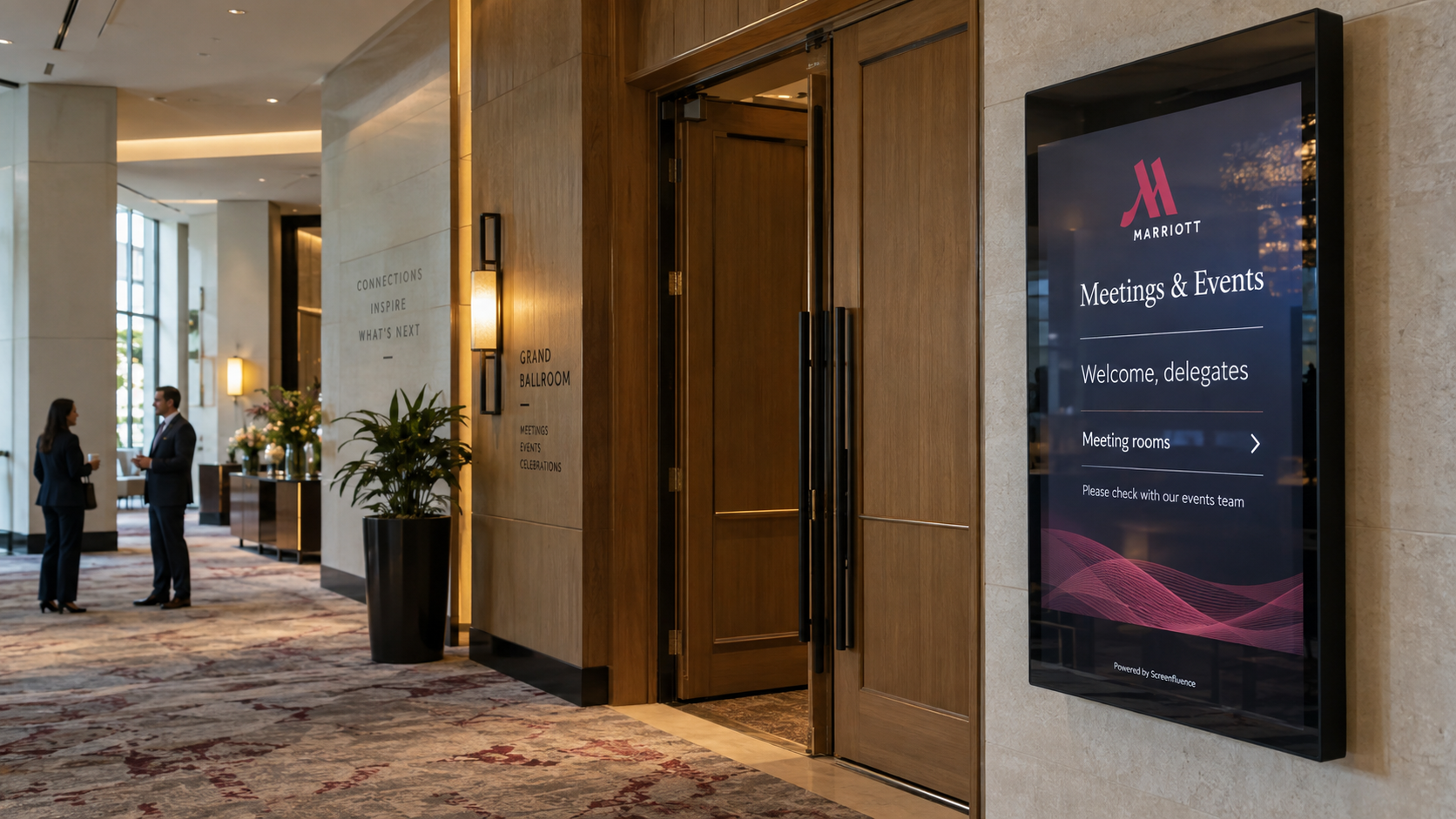
For Marriott, digital signage needed to serve both audiences across multiple properties. Screens in lobbies, restaurants and event spaces had a different purpose from those in break rooms, back offices and service areas. Each needed relevant, current content, presented consistently.

Keeping pace with each property

The existing systems made that difficult. Content updates required substantial manual work, including methods such as updating screens by USB. Information took longer to change, and the presentation of content varied between properties.

The challenge was to make updates easier without losing control of the brand. Corporate teams needed oversight, while regional and on-site staff needed the flexibility to share information specific to their locations. They also needed better visibility into the screens themselves, rather than relying entirely on checks at each property.
The solution

Central oversight with local control

Marriott implemented Screenfluence to bring guest-facing and employee-facing signage onto one platform. A centralized dashboard gives corporate, regional and on-site teams access through role-based permissions.

That structure supports the way hotel communications work. Corporate teams can maintain brand standards, while property staff can manage the local information that makes a screen useful to its audience. Brand-aligned templates provide a consistent starting point for content across participating properties.

Content organized around its audience

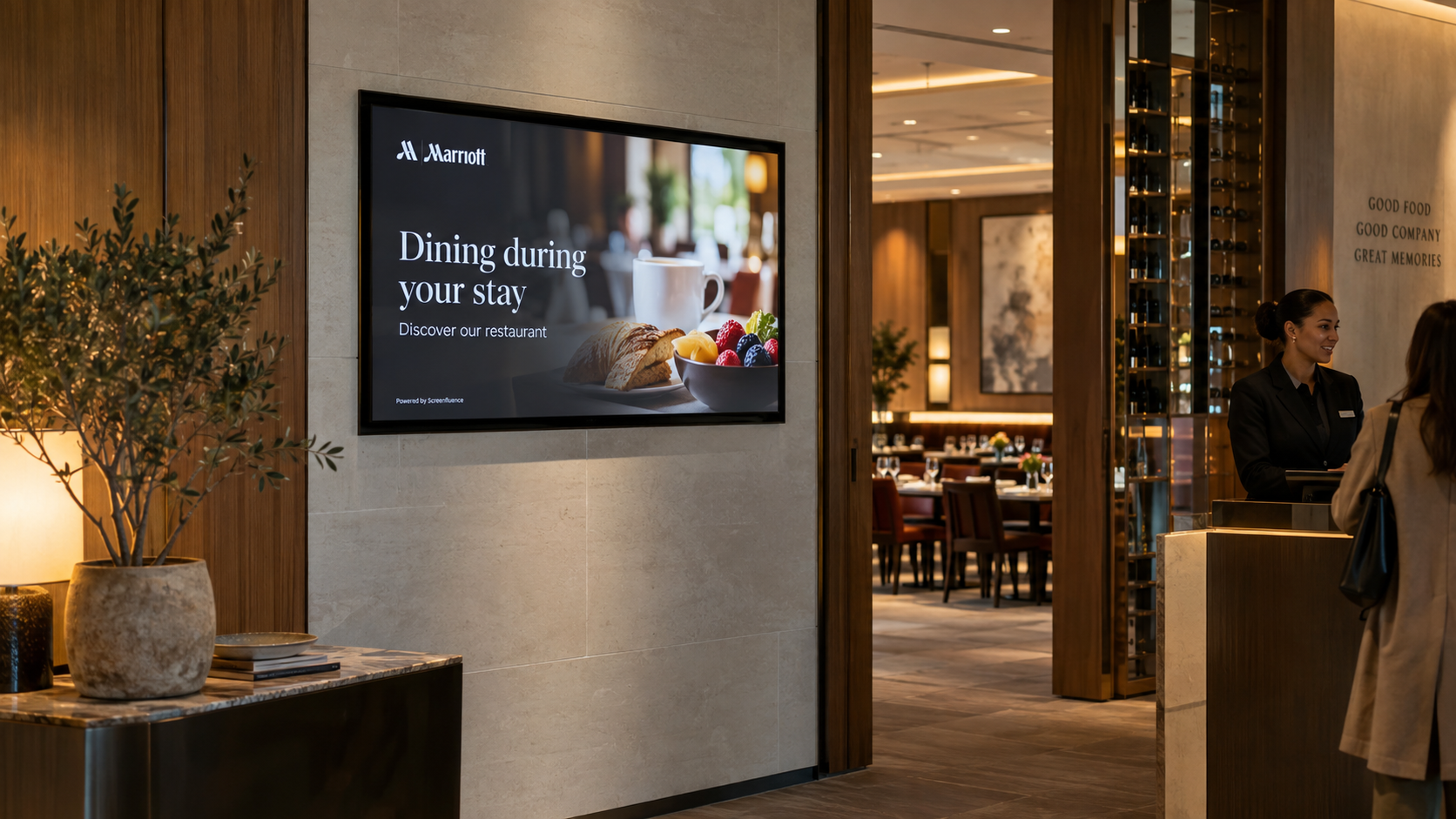
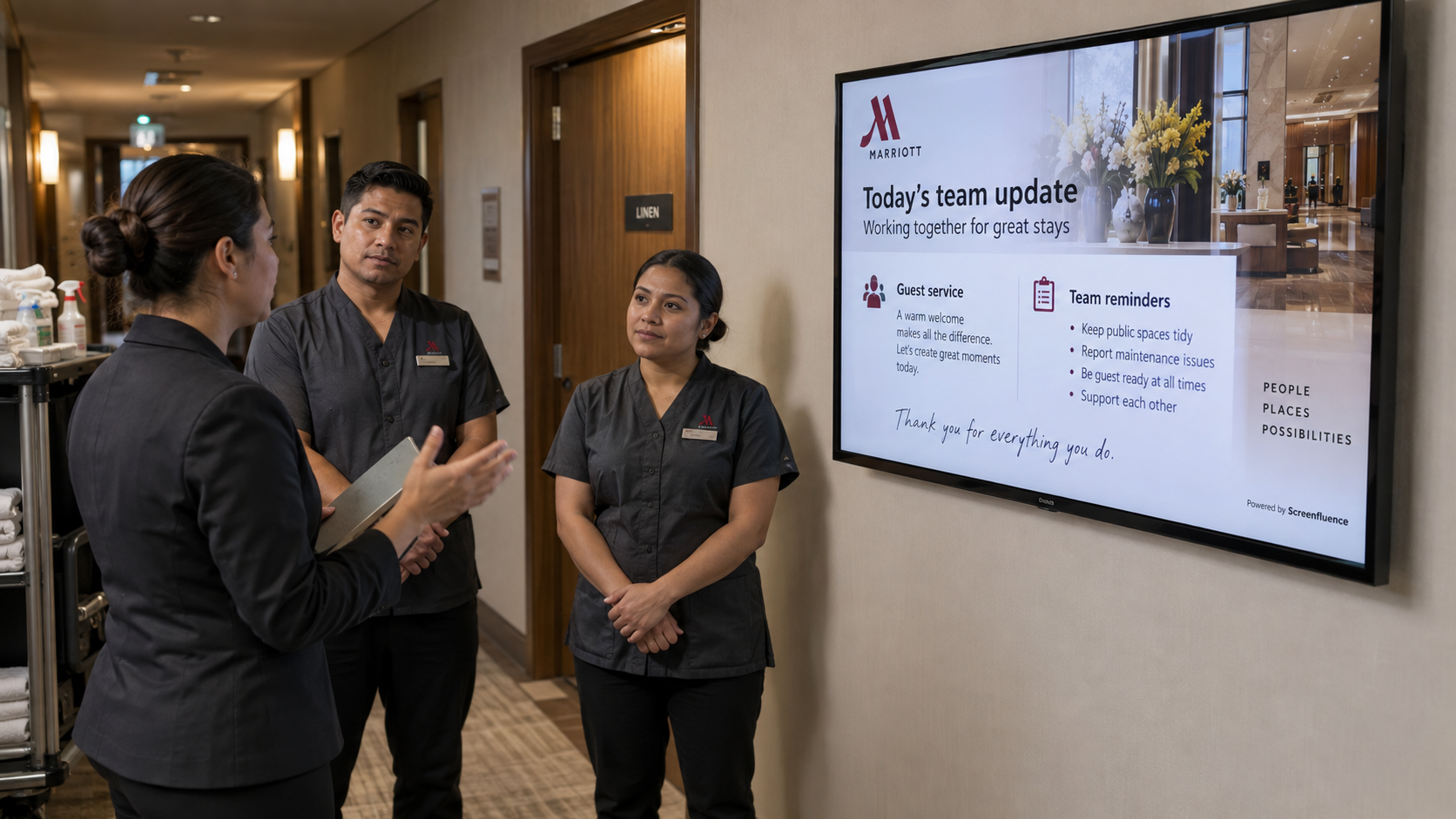
Separate front-of-house and back-of-house screen networks use their own playlists. Guest-facing displays can carry information about amenities, local events, rates and promotions. Employee screens can focus on HR communications, training reminders and safety notices.

Keeping those playlists separate allows both types of communication to run through the same platform while remaining relevant to the people viewing each screen. A lobby display can support the guest experience while a break-room screen keeps associates up to date.

A more practical publishing routine

Drag-and-drop content management makes updates easier to prepare, and automated scheduling handles recurring content. Teams can plan what appears on screen rather than manually repeating the same publishing tasks.

Remote updates also reduce the need to visit individual displays to change their content. For teams managing communication across multiple locations, that removes a recurring piece of on-site work.

Visibility beyond the content

Remote monitoring gives teams a view of device status across locations. Alongside content management, it provides a practical way to oversee the signage network and identify screens that need attention.

The results

More consistent communication across properties

Screenfluence gave Marriott a shared approach to managing on-property signage. Brand-aligned templates and central oversight help keep the presentation consistent, while local publishing access allows individual properties to keep their information relevant.

Marriott reports improvements in both guest engagement and staff communication. Guest-facing screens provide current promotional and informational content, while back-of-house displays give associates a regular channel for HR, training and safety updates.

Less manual work to keep screens current

Remote publishing and automated scheduling reduce the effort involved in maintaining screen content. Teams can update information without relying on USB changes and schedule recurring messages instead of handling each appearance manually.

That gives hotel staff a simpler process for keeping content current across the spaces they manage, from public areas to employee locations.

Better oversight of the network

Live device status monitoring adds visibility across properties. Teams can oversee the screens as well as the content, supporting the ongoing operation of a network serving two distinct audiences.

Together, these changes make digital signage a more manageable part of hotel communication: useful information for guests, a dependable channel for associates, and a publishing process that supports both corporate standards and local needs.

119

Properties worldwide

30

Countries

1

Platform for guest & associate communications

“It has greatly enhanced the way we communicate with our associates.”
Marriott International · Director of People & Culture
How Marriott keeps guests and associates informed.

Run every screen, from one place.

Join 1,000+ teams already managing their displays with Screenfluence.
No hidden fees. No steep learning curves. Just one dashboard.